Showing posts with label Australia. Show all posts

Thursday, January 31, 2013

In Australia Camels Eat Your Toilet

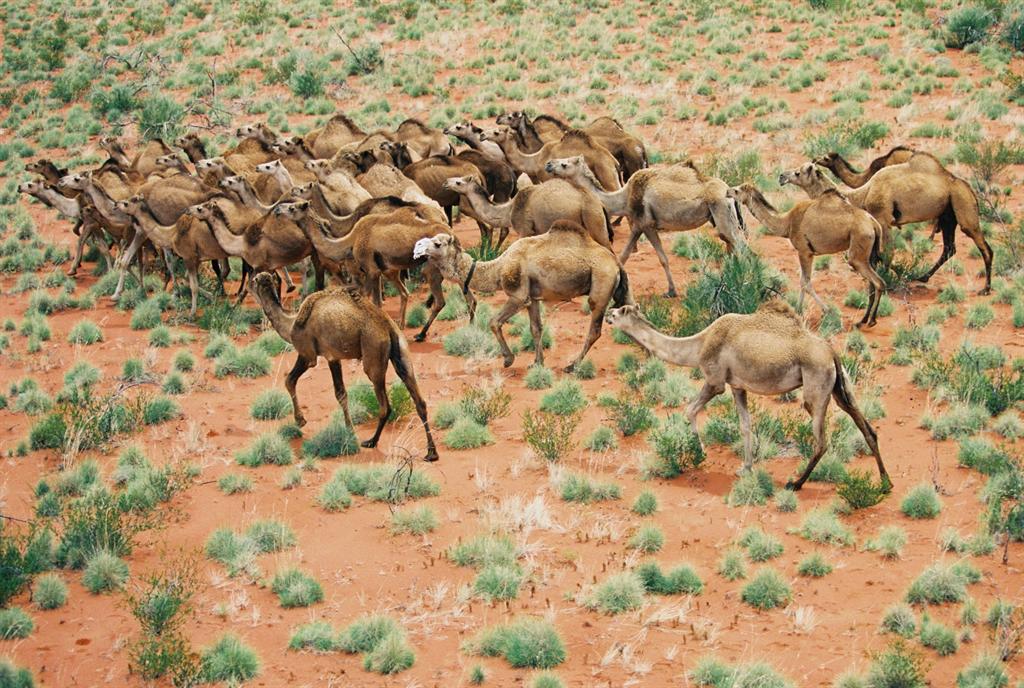
Never mind dingoes eating their babies, now Australians have to worry about camels eating their toilets. As if cane toads, plagues of mice, and the ravages of global warming was not enough for the peoples and environments of Australia to endure the island continent now hosts about 3/4 million feral camels. And stories of desperate herds of camels plundering human irrigation systems, including breaking into the loo and destroying toilets in search of water have begun to trickle in from the outback.

Northern Territory Government (c)

Now, as the case with most invasive species, the usual charges of environmental degradation have much maligned Australia's feral camels- which include the only truly "wild" Dromedary camels left in the world as well as the endangered Bactrian camel. Camels destroy and foul water sources. They over browse the native vegetation at population densities greater than 2 per square kilometer. They don't respect aboriginal sites or the fences of cattle ranchers, often times destroying the latter outright. They eat 80% of the plant species available. This outcry over the depredations of feral camels resulted in a recent government sponsored culling of about 100,000. Subsequent droughts have since lowered the population from a high of about 1 million to about 750,000.


But if you look back at the history of the camel in Australia a similar dubious light is cast upon the creatures relationship to the peoples of Australia.

Camels were originally imported to Australia as beasts of burden to assist in the conquest of the arid interior. Horses, donkeys and bollocks were used initially but expeditions utilizing these animals often met disastrous results- not just for want of feed and water, but because they were reportedly "spooked" by the terrain of the Australian outback. The importation of camels, and their Afghan cameleers- dubbed "Ghans"- proved pivotal in the conquest of the outback resulting in such infrastructure projects as the Overland Telegraph and Trans Australian Railway.
But the Afghan cameleers, later including Islamic men form other middle eastern countries, were not met with significant fanfare by Australians. They set up their own communities, mosques and business ventures. They married aboriginal women and, to the dismay of Aussies, were not afraid to go on strike. Fear, mistrust, and racism was rife. Their camels, despite the critical link they provided in the movement of goods and water, were accused of fouling water sources for livestock. And when the car and railway made the camel obsolete in the early 1900's the days of the Ghan were numbered. Many did not have their contracts renewed and moved back to and remained in their home countries. Those that did seek to return or remain in Australia were denied access on account of the Immigration Restriction Act of 1901.

The strange and little known history of Islamic cameleers in the Australian outback unceremoniously came to a close. Here is an account of one of the few remaining mosques from reCollections, the Journal of the National Museum of Australia.

In the Adelaide summer of 1952 a young Bosniam Muslim and his friends, newly arrived immigrants, pushed open the high gate of the Adelaide mosque...As Shefik Talanavic entered the mosque courtyard he was confronted by an extraordinary sight. Sitting and lying on benches, shaded from the strong sunshine by vines and fruit trees, were six or seven ancient, turbaned men. The youngest was 87 years old. Most were in their nineties; the oldest was 117 years old. These were the last of Australia's Muslim cameleers... Several had subscribed money during the late 1880's for the construction of the mosque which now, crumbling and decayed, provided their last refuge.

But far from fading into obscurity, Australia's camels have proved quite robust in their new home. Released into the wild when they proved obsolete, a founding population of a few thousand had grown to close to a million animals. The government began a cull of about 100,000 and then the droughts, substantially lowering the population. But a contingent of voices has arose in defense of the feral camels of Australia.

Unlike cattle, horses, sheep and other livestock which humans place in arid lands- camels are true desert  specialists. Their broad, splaying feet do not cut into the shallow dirt causing erosion and damaging soil and root integrity.

Camel. Toe.
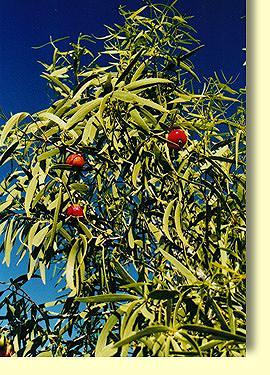
Although they do eat 80% of the plant species available to them, their nomadic nature prevents substantial over browsing. And the wide swath of vegetation they go through means no one type or level of vegetation is hammered. Primarily browsers, camel will eat grass occasionally but it does not form a significant component of their diet. No doubt when allowed to proliferate unchecked camel populations can outstrip preferred vegetation such as has been observed with camels over-browsing Quandong trees.

Quandong tree
Looming over the whole camel debacle is the cattle industry of Australia. We have touched upon the issue of cattle in arid regions in Cowboys and Dinosaurs before. While the lamentations of those calling for camel reductions will sound off loud and hard about the devastation 1 million cattle wreak ecologically on the outback nary a voice is raised over the 28 million head of cattle on the continent of Australia. With more cattle than people Australia is the second largest exporter of beef after Brazil. While no doubt camels can do damage at high populations, it is hard to argue that the damage they do is worse than what cattle do. The people, economy, environment and ecology of Australia is beholden to cattle.


Interestingly some innovative Aussies have already begun to run camels commercially for export, both for food and sport. Although a delicacy in several southeast Asian and Middle Eastern countries- the economic reality of harvesting, shipping, and marketing this meat from the remote interior has not yet taken off for whatever reasons. Not surprisingly Aussies themselves have not taken to feasting on their feral country mates. Don't expect to see camel on the menu at Outback Steakhouse any time soon.

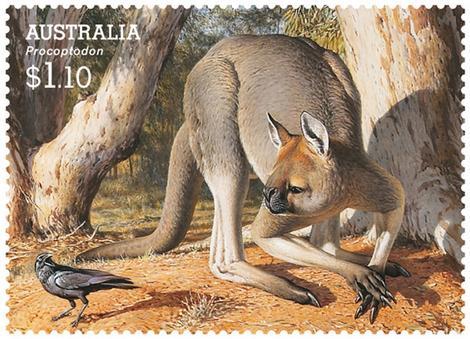
And a new voice has entered the fracas of the camel issue, a voice from the past. Ecologically Australia has supported several large browsers in the recent Pleistocene, the giant wombat Diprotodon and the giant short faced kangaroo, Procoptodon. Camels, it is argued, fill the gap of the large browser that always existed here. Not only are camels OK for the outback- they
Procoptodon, wikipedia
benefit it. By eating away thick brush and scrub the torrential fires that plague Australia are lessened. And by creating gaps in the brush, smaller animals find valuable fire escape lines. What we are really talking about here, and what may in fact be happening in real time, is the controversial issue of "rewilding" in which formerly extirpated/extinct species or, in this case, proxy species, are reestablished in their proper ranges. The goal is not so much to recreate, but recalibrate, a more complete ecological panoply.

But what is missing here is control. Now a million camels seems like a lot, but spread over the whole arid interior it is really not that daunting of a population. Certainly if Aussies don't find a way to sustainably and economically manage the herds of camels either by exporting the beasts or serving them up as tucker we can expect that droughts and starvation will have the final say (the camel population is remarkably disease free being descended from imported healthy stock). Or we look towards other means of control. Both Diprotodon and Procoptodon had to contend with Megalania, which most likely behaved like a hyped up Komodo Dragon. Of course we can't bring back Megalania but some have suggested another option. Far from being a small island endemic, recent findings suggest that Komodo Dragons were in fact quite more widely distributed throughout southeast Asia and Australia than their present range suggests.
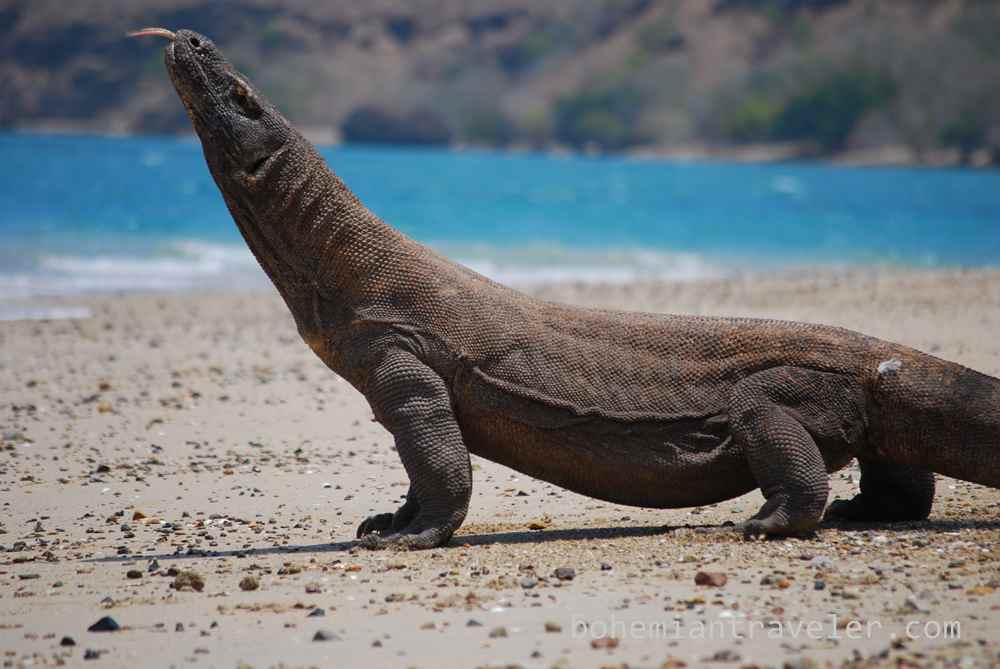
Varanus komodiensis. (c) Bohemian traveller

Is it time to repatriate the lizard king to help control the ferals of Australia? Something tells me the cattle ranchers might have an opinion on that....


Cheers!!!!


Pertinencia

Afghan Cameleers in Australia

Camels to Rescue in Ecosystem

Camels Rescue Australian Inland  Ecosystem by Replacing Diprotodons ASAP

Camels or Cattle?

Ecological Effects of Feral Camels on the semi-arid regions of Australia

Tens of Thousands of Feral Camels Culled in Australian Outback


Support me on Patreon.
Like antediluvian salad on facebook.
Watch me on Deviantart @NashD1.Subscribe to my youtube channel Duane Nash.


Thursday, August 30, 2012

Shark Bay

Ok, Ok, Ok- after the throngs of requests for a new post from my minion(s ?) I got something for ya' all. Honestly I just started Calculus and Organic Chemistry so about a post a week is how it will be for awhile.

Because we are at the tail end of summer and shark week just went down- all things sharky are on my mind. But this post also serves a dual purpose of acting as a bit of a prologue to my next installment of This Island Earth- where I will be talking about the importance of large predators in a healthy ecosystem. Now the classic study that has recently came out in these regards is the ecological cascade that occurred with the reintroduction of wolves into the greater Yellowstone area. Long story short the return of the wolf allowed for a diversification of songbirds, Willow/riparian vegetation, scavengers, and beavers. Read about it here.


Now you might already be familiar with that ecological parable, if not be sure to check it out. But I want to focus your attention to another, lesser known, analysis of the effect of a top predator on a ecosystem- tiger sharks (Galeocordo cuvier) in the seagrass beds of Shark Bay western Australia.

Seagrass beds are a little appreciated, but highly productive, marine ecosystem. Along with mangroves, seagrass ecosystems represent one of the few examples of flowering plants (angiosperms) successfully invading the marine realm- complete with submarine pollination. Over 60 species exist worldwide in tropical/temperate seas and are important primary producers where they occur- providing food and habitat for a plethora of critters. They only exist on sandy bottoms in the photic zone and, like coral reefs, are highly sensitive to perturbations in nutrient levels. Too much nitrogen/phosphorous stimulates algae growth in the water column- blocking out the sun- and eventually the system degrades to a algae dominated soup. Probably does not surprise you to learn that seagrass is declining worldwide. Oh yeah, and seagrass might just be the savior to coral reefs.


Seagrass is also important as an ecosystem engineer. The large beds inhibit tidal and storm surge as well as building up on itself creating vast shallow beds with tremendous primary productivity. The effect is basically that of an "underwater grassland" and the analogy is apt.

A UNESCO world heritage site, Shark Bay contains the largest example of an intact seagrass dominated ecosystem in the world. Much like the coral reefs I talked about here, Shark Bay provides a unique opportunity to study a relatively pristine environment- less than 1000 people inhabit the 1,500 km of coastline that the bay encompasses. Although the bay is huge, covering 10,000 square km, the average depth is fairly shallow at about 10 meters owing to seagrass' ability to modify its own habitat.

Shark Bay, western Australia
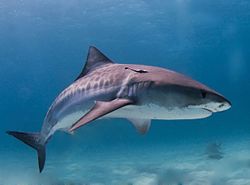
Of course a habitat of this type is bound to attract some animal life and Shark Bay does so in spades. The bay is home to about 10,000 dugongs as well as abundant bottlenose dolphins, pied cormorants, sea snakes, loggerhead and green sea turtles. And lording over all of these is the brootal tiger shark. How the tiger shark affects these species- both by preying on them directly and by just simply being around- is the crux of this article.


Don't let the pop science mantra of "mistaken identity" fool you- the tiger shark has and does actively eat humans- and just about anything else it comes across in the sea, earning the dubious nickname "trashcan of the sea". It just happens to be that in aptly named Shark Bay mammals, birds, and reptiles happen to be on the menu in addition to the usual fare of fish and inverts. How these interactions affect these critters and the larger ecosystem has begun to be illuminated through the Shark Bay Ecosystem Research Project.


The dugong (Dugong dugon) is technically the only herbivorous marine mammal (close relative the manatee is not 100% marine) and is highly dependent on seagrass- often eating both the blade and root of the seagrass- acting as a "whole plant predator". What the researchers found is that, due to tiger shark threat, the dugongs in Shark Bay avoid foraging in the exposed middle of seagrass banks even though this area has the most nutritious grasses. Instead the dugongs, as well as the green turtles, concentrated their foraging efforts in the edge of seagrass banks- where the threat from tiger sharks was minimal. By establishing test enclosures the researchers observations were supported.

Outside enclosed area seagrass grazed to nothing
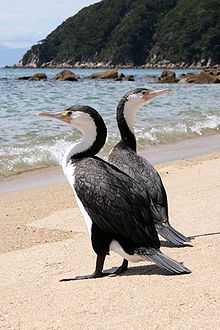
Interestingly both bottlenose dolphins and plied cormorants avoid areas where dugongs are plentiful, because tiger sharks are plentiful there as well. And these habitats are rich foraging grounds for the birds and dolphins due to the abundance of small fish, but simply not worth the risk. Don't let the image of dolphins as "people of the sea" fool you- large sharks commonly catch, kill, and eat dolphins (u r warned violent here)- and have tactics to do so. So in effect, the presence of dugongs actually discourages both pied cormorants and bottlenose dolphins.

Pied Cormorant

To add another element to the story, small seagrass consuming fish such as striped trumpeters may be winning out big because tiger sharks are keeping their predators (cormorants/dolphins) and competitors (dugongs) at bay. How and if these fish inhibit seagrass cover is yet to be determined...

What we can see here is that tiger sharks both directly and indirectly affects the foraging behavior of common prey items (dugongs) and less common prey items (dophins, cormorants) which has repercussions throughout the system. Tiger sharks are indeed the guardians of the seagrass banks.

Stromatolites. Shark Bay Australia

One final tid bit. Paleo folks might also know about Shark Bay because of stromatolites, which thrive in the hypersaline shallows of Shark Bay. Indeed hypersaline Shark Bay is the only known occurrence of these ancient accretionary cyanobacteria biofilms. Shark Bay maintains a salinity higher than the neighboring open ocean because it is so shallow and the high evaporation rates of hot subtropical Australia concentrate salt. As I mentioned earlier, it is the seagrass banks that create this extensive shallow gradient. So if the seagrass creates the environment for hypersalinity, which allows stromatolites to persist, and tiger sharks preserve the seagrass banks- can we say tiger sharks preserve the stromatolites?


Any excuse to post pics of cute girls will be used
Cheers!!

Pertinecnia

Shark Bay Ecosystem Research Project


Support me on Patreon.
Like antediluvian salad on facebook.
Watch me on Deviantart @NashD1.Subscribe to my youtube channel Duane Nash.


Related Posts Plugin for WordPress, Blogger...