Showing posts with label Suchomimus. Show all posts

Friday, November 7, 2014

Time For the Giant Heron Spinosaurid Analogy to Bite the Dust Part 2: Getting More Than Just Your Feet Wet

Now first things first I want to clarify why I am writing these posts and how dealing with spinosaurid paleobiology is a veritable land mine. In my last post I echoed the sentiment of a poster for #2014SVP (Anduza, Danny Museum of the Rockies) that the wading "heron" analogy is not the best analogy of all possible tetrapod analogies for spinosaurids. As Dr. Thomas Holtz pointed out in the comments this is a "strawman argument" because no one has seriously suggested that spinosaurids hunted in the manner of herons which rely on a rapid acceleration of a sigmoidally orientated head and neck after visual detection of prey. And this is true: it is well known that spinosaurids had overall straighter and stiffer necks than let's say a fairly basal theropod like Coelophysis. Where the heron analogy works is that it provides a blueprint for an animal that wades in after prey. 

However, and this is a big however, spinosaurids - perhaps more than any other group of extinct animals save tyrannosaurids - lie squarely at the intersection of public and professional interest and interpretation. We saw this very interesting phenomena just occur - #Spinogate2014 - that illuminated an interesting socio-scientific-internet experiment. A radical new stance for Spinosaurus asserted, questions raised and doubt sown on the internet, and a very loud and vocal internet cadre of anti-Ibrahim et. al.  proponents sallied forth. In fairness some of the Ibrahim et. al. critics are acting in good accordance with sound scientific scepticism and legitimate concerns. But one can not deny that a social aspect - bipedal loyalists, "bipedalists" if you will - are really hellbent on keeping the JP3 Spinosaur alive and well. And continue to do so even after Ibrahim et. al. discounted the criticisms.

But this post is not about Spinosaurus or Spinogate it is about how an analogy for the group as a whole - the "giant heron" model - has been seized upon by the lay public as a point of reference for the group to the point where, I will argue, the "heron" model is providing a disservice. And the manner in which the "heron analogy' has gone too far is not wholly from paleontologists - but from how these animals are portrayed in artistic and especially video reconstructions. Unfortunately even though the "heron" analogy was useful in the broadest sense, popular reconstructions have run rampant with the "giant heron" model dominating. This is a hindrance.
Spinosaurus (c) BBC
Spinosaurus (c) Todd Marshall
Baronyx (c) Mark Witton
 Suchomimus w/Kryptops (c) Julius Csotonyi
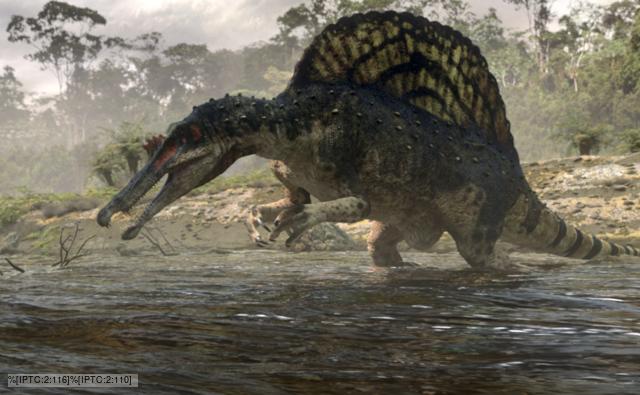
As you can see in these assorted and very beautifully rendered pictures of various spinosaurids there are echoes of the "giant heron" analogy in all of them. In none of the pictures do we see the spinosaurid body largely submerged. The BBC pic and the Witton pic (btw check out Witton's great deal on art, remember the holidays are coming and we should support independent paleo projects) suggest an emphasis on visual detection a la herons.  But the lack of strong adaptation for binocular vision and emphasis on sensory pits speak against this. Unfortunately even the new NOVA doc on Spinosaurus depicts it fishing heron style.  The Marshall pic shows the Spinosaurus taking advantage of its sensory pits but the choice of putting the animal on the bank of the water instead of in the water speak to a larger problem in spinosaurid reconstruction - A PERVASIVE FEAR OF GETTING WET. The Csotonyi illustration is awesome, but again conservative in term of water depth (book here).

Seriously, for a group of animals that we can say exploited aquatic resources with strong confidence, there is a strong reluctance to actually put the whole animal in the water (where its sensory adaptations and foraging options make much more sense I will argue anyways). The above images have a profound impact on how these animals are imagined by laypeople and professionals alike. These representations that invoke the heron model to various degrees need to be dialed back a few degrees in my estimation. And here I want to provide some nuance to my argument. It is not that I am suggesting scenes like the above did not ever happen. That a spinosaurid, at one time during the long span of time such creatures existed, happened to be standing on a river bank and coincidentally a large fish just happened to swim by in shallow water and that the spinosaurid was able to lunge at it in a heron like manner and catch it - this most certainly happened. What I am suggesting is that the representation of such a moment and style of predation is disproportionate to the amount of time such a style of predation actually occurred. 

More Than One Way To Be A Wading Aquatic Predator

Grey Heron & Painted Stork Feeding (c) Lau SY
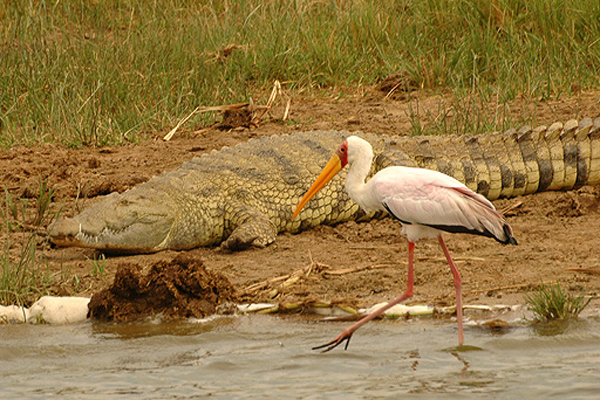
What do they say?... a picture is worth a thousand words. Above you see the very obvious difference in feeding between a wading grey heron and a painted stork. The heron relying on slow, cryptic stalking and the stork employing tactile feeding - sweeping its sensitive bill through the water and feeling out prey. Below is another video this time of a wood stork and various heron illuminating the different feeding strategies - also note that the wood stork will intentionally disturb the substrate to flush out prey.


Hopefully you probably figured out where I am going with this. Various wading storks that employ a tactile method of foraging with their sensitive jaws immersed in the water offer more utility as an analogy to spinosaurid foraging behavior than visually dependent herons. A slight shift in perspective is all I am suggesting. In light of their downward sloping profile, sensory pit equipped snout, and lack of binocular vision this view of spinosaurids highlighting a foraging behavior dependent on tactile foraging is of some use and should be taken into consideration for popular reconstructions of these animals. You can see that Marshall almost got it right in the picture above where he at least got the snout in the water, but he did not want to get the spinos feet wet. Sheesh just put the whole animal in water and it makes much more sense.

Which brings me to my next point, how deep of water to put these animals in. Anywhere on the spectrum of foraging in drying up pools all the way to completely submerged in my opinion. In light of the preponderance of illustrations/animations depicting them as seemingly limited to the shallows I am definitely for more depictions of them in deeper water. Even the new spino doc used this depiction of shallow water heron foraging. Furthermore, all things being equal, big fish are going to seek refuge in deeper water especially in predator rich environments. All these illustrations of spinosaurids in ankle deep water and a 200 pound lungfish or coelecanth just sort of nonchalantly offering itself up for grabs in the shallows.... yeah, I don't really buy it. Its insulting to fishdom and seemingly outside the bounds of Darwinian evolution. If fish are being predated upon fish will seek refuge in deeper water. And if you are a big spinosaurid trying to stalk a fish visually - if you can see it chances are it can see you and evade you. 

So how did a spinosaurid go about hunting in deeper waters? Well first and foremost for spinosaurids to be successful they want as many things in their advantage as possible. And that means murkiness. If you can't see me that means you might not swim away in time before my snout detects you. This might mean foraging at night, when fish although not "sleeping" do go into sort of rest phase and of course vision is limiting. Also many waters are naturally murky or turbid, especially in the tropics. Illustrations of normally murky tidal and tropical rivers intentionally clean things up a bit but that is simply an artifact of allowing the viewer to see what is under the water. Tides and storms can also disturb the water creating turbidity. Other animals, dinosaurs frolicking, and the large fish themselves rooting around in the mud will create turbid conditions. Remember the "river of giants" and also that lungfish are known feeders of benthic prey and are rooting around all the time. And then finally the spinosaurid itself; if conditions are just a little too clear; if prey is hiding in vegetation or in the mud; just use your big feet to stir things up a bit. Like a 10, 000 pound wood stork. After that it is just a matter of slowly cruising the water until your sensitive snout and/or gaff clawed hands bump into something tasty.  


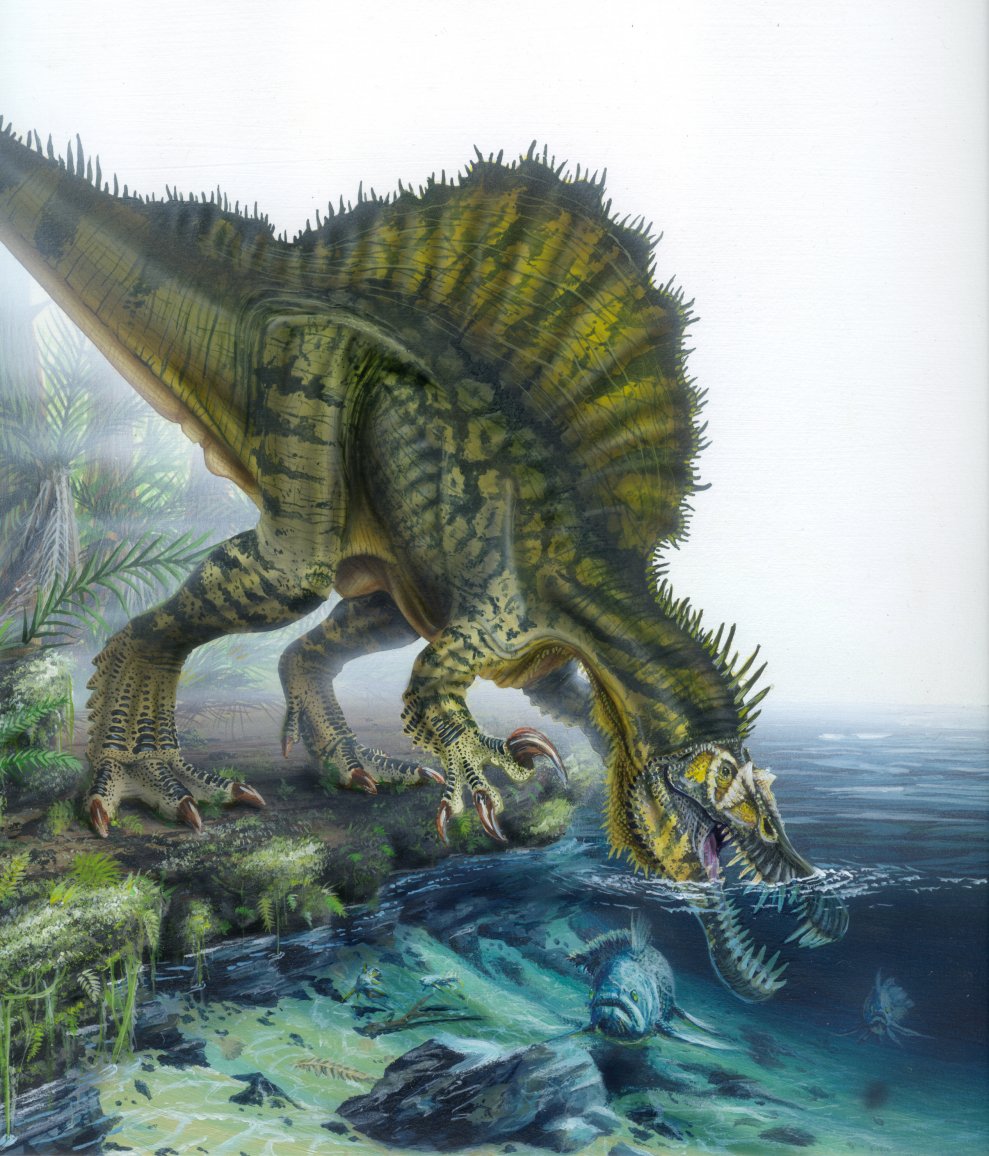
Which is pretty much what I am trying to illustrate above where a Suchomimus tenerensis is intentionally stirring up the sediment in order to flush prey ( a poor lungfish of course) and cloak itself as well. Notice I draped loads of barbs or "whisker" type integument over the animal in order to make the whole animal sensitive all over. Hey why not, we are in a bit of an integument free for all for better or worse.

But I should also add that when fish were concentrated in drying, shallow pools or pushed through topographic bottlenecks due to tides, migrations, spawings any self respecting spinosaurid in the area is going to hone in on that area to forage as opposed to the method depicted above. But such confluences of events that make fish so easily scooped up are usually few and far between.

Marabou Stork w/trapped catfish (c) Jonathan & Angela Scott
I should also note that there are some artists that have begun depicting spinosaurids mostly or even completely submerged. Brian Engh's depiction comes to mind (in fairness this Spinosaurus was made before the new reconstruction). He also has got the arms and claws outstretched feeling for possible prey and increasing its feeding envelope. His depiction is suggestive of an animal dependent on tactile senses. Check out his awesome blog Don't Mess With Dinosaurs and remember it for the holidays because he has some pretty cool merch and we all need to support independent paleo/monster creations if we want more of 'em!!


*Update 11/8/14 Andrea Cau of Theropoda has also been beating the drum for putting more of spinosaurid anatomy immersed in the water. Anatomically citing a body design pitching forward and down - an anteroventrally inclined head partially immersed in the water has depicted in the below schematic. In the comments below Andrea informed me that Simone Maganuco brought up the "stork analogy" 5 years ago in a conversation - so credit where credit is due.


Why the "heron" model has dominated the view of these animals over others such as "storks" is a question worth asking. Maybe many view herons and storks as sort of "samey" while in fact their foraging method is quite dissimilar. It is worth speculating that dinosaur thought and concept is still largely dominated by North American and European peoples. Where, especially in America, there are a lot more visual orientated heron type aquatic waders than tactile stork type aquatic waders. I believe we pretty much just have the wood stork. Europe is known for storks but primarily they have white storks which often feed in wet meadows and fields as opposed to in the water. But go down to an east African river or spend a week on the Pantanal and you will see relatively more of all types of waders - but especially stork style tactile waders.

So in conclusion more "stork" and less "heron". But actually I like "storkodile" the best because it gives reference to the tooth studded jaws, large size, and opportunistic nature of these beasties. Eat your heart out Crocosaurus.

Cheers!!


Support me on Patreon.
Like antediluvian salad on facebook.
Watch me on Deviantart @NashD1.Subscribe to my youtube channel Duane Nash.


Saturday, August 16, 2014

Did Bakker Get Spinosaurus Right After All?

Roll with me for more Spino madness in my book Dinosaur Enlightenment: Piercing the Veil on Kaiju Dinosaur in an Age of Disruption available on Amazon ebook and soft copy!! https://www.amazon.com/Dinosaur-Enlightenment-Piercing-Kaiju-Disruption/dp/B08M2FZ9GX/ref=tmm_pap_swatch_0?_encoding=UTF8&qid=&sr= *Update 9/23/14 As this post continues to get heavy traffic it should be noted it was first posted (8/16/14) before the official publication of the new Spinosaurus aegyptiacus material (Ibrahim et al., 2014) but I will leave it as it was originally posted. That being said I have seen nothing in the new material, nor the arguments against it I have solicited online, that would disqualify it as one of several terrestrial locomotory styles possible to this animal. Indeed I think based on the ontogenetic stage of the animal as well as the substrate the animal is on many locomotory styles were utilized. This ability to switch locomotory styles is well documented in crocodiles especially with regards to size and substrate. Additionally, as some have objected, what I am proposing is not a radical overhaul of known theropod anatomy but simply a co-option of known theropod resting anatomy. As such, belly sliding - which is utilized by several amphibious/aquatic  members of both extant archosaur lineages (birds/crocs)  - with possible use of the forelimbs in a "combat crawl" motion still remains a viable, and in my opinion robust, hypothesis for terrestrial locomotion in this animal.

We all know and love the new Spinosaurus aegyptiacus reconstruction right? "Disenchanting" is how Douglas Henderson described it on facebook. And it does fall a little bit shy of the impressive dual land/water arch predator it has so often been posited to be, especially since a little movie came out (JP3 duh) and our friend the Spino terrorized everything from T-rex to estranged parents. Truth be told it looks a little clunky, a little too front heavy to work right - at least the way we expect theropods to work  since GSP started drawing them as svelte athletes rip roaring across the page. So, yeah I do want to comment on the new Spino reconstruction and yeah there are a lot of people - very knowledgeable ones at that - that would definitely disapprove of what I am going to do before publication of the new material. But I will argue that my interpretation on what was going on with Spino is in fact presaged by what we already know from other members of spinosauridae and yes, as suggested by the title, I think Bakker got the jump on all of us by suggesting way back when that Spinosaurus was a lot more aquatic than generally portrayed. But I will offer my little Antediluvian Salad spin on Spinosaurus and hopefully you find it interesting. And leave a comment.


Moss Landing/Elkhorn Slough US Army Corps. public domain
Before I get to Spino itself I want to tell a little story to help illuminate my point. A little tale about kayaking. I do like to kayak and one of the funner places to do so in California is a place called Elkhorn Slough in the Monterey Bay. It is a tidally influenced estuary and there is always open access to the ocean, especially because of the harbor at the entrance having to be maintained. It is noted for the unique population of sea otters that forage in an estuary as opposed to the ocean - often times within view of the highway that crosses the estuary. These estuarine sea otters have been shown to predate heavily on crabs and, in a classic trophic cascade, have bolstered stands of eel grass in the estuary. In addition to the otters, there are loads of harbor seal, water birds and miles of watery inlets to explore. It is the type of place that lets you imagine the California that once was - when coastal lagoons and estuaries dotted the entire coast, flocks of birds blackened the skies and grizzlies patrolled everywhere. Elkhorn Slough is so spellbinding in fact that as I kayaked it I lost track of the depth of water I was in and became grounded in mud in shallow water. This sucks I thought to myself as I considered the possibility of having to get out and push my kayak back into deeper water. Thankfully cooler heads prevailed. I did not make the rookie mistake of getting out of the kayak where I would have likely got mired waist deep in tidal mud in a sulphurous mess. In our best impersonation of saltwater crocodile plowing through tidal flats we shimmied left and right and paddled with short quick thrusts to get back to deep water. And if you imagine the long rounded body of the kayak as equivalent to the long low body of a crocodile, seal, or otter the analogy of moving through deep/sticky mud in a kayak is spot on. And if you think of large amphibious tetrapods moving through the mud, and I am talking deep/miring mud, they all get low and down in it and use their body surface area to prevent sinking too deep. Go look at saltwater crocodiles steaming through tidal mud flats in Queensland.


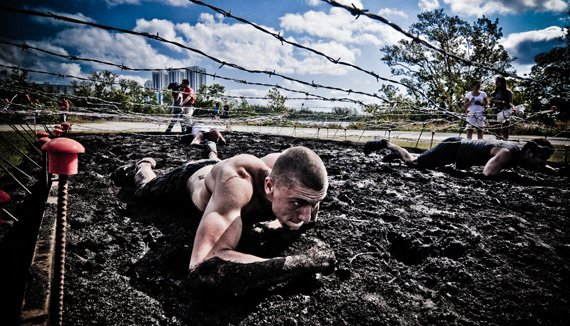
Large tetrapods that do not use this technique in deep mud risk getting mired. For large bipeds the risks are even more extreme as all of the weight is concentrated on just one limb when pushing off. As the picture above attests a very large American crocodile has some advantages over a bipedal hominid in deep mud (he survived btw). Whether you are a trained soldier or a simply like to take the Spartan Challenge one is quick to see the benefits of getting down into the mud to get through it. It might seem counter intuitive at first but just ask this guy.


Now following this line of thought of how to traverse muddy areas as a large tetrapods let us revisit Spinosaurus aegyptiacus - especially with respect to the new reconstruction c/o Paul Sereno.

Nat Geo
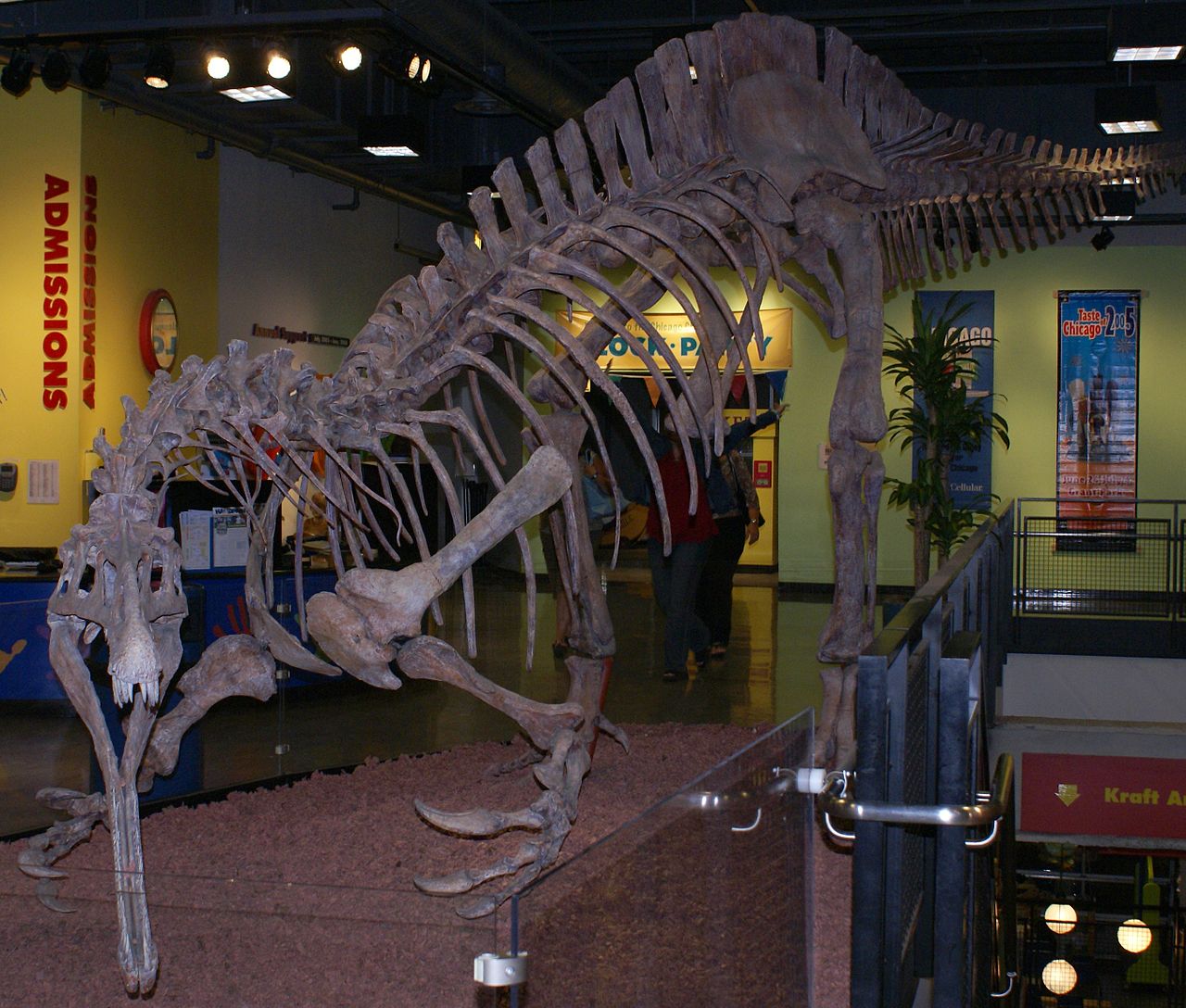
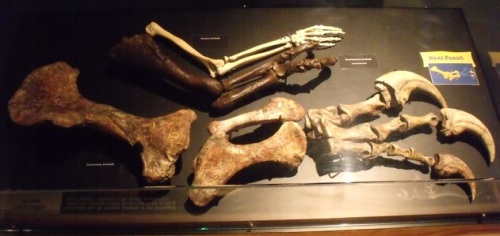
So we got a couple things going on here. A very long, low body with some ridiculous looking shorty-shorts legs. Especially reconstructed in the Paulian push off mode the beast looks seriously in danger of tipping over. Combined with the strangely down turned head and the heavy arms the question is begged is this manoeuvre even possible? To further complicate the issue let us put this animals in its habitat - tidal/deltaic wetlands. (insert discussion on spinosauridae habitat choice, diet, you can find the evidence is compelling!) Now we have the issue of a massive, bipedal animal in a habitat full of mud - as discussed earlier large bipeds in thick mud can be an issue. What was the poor spino to do? What I am going to suggest is that Spinosaur and its ilk went to boot camp and learned how to combat crawl. Not entirely quadrupedal but not entirely bipedal but a bit of a compromise between the two. Lower the torso, push off with the short back legs - a bit like a penguin actually - and the coup de grace those bizarre and massively boned and muscled forelegs. Simply fold them in the manner all theropods are now known to do. The radius and ulna take the weight and the clawed digits are curled inwards. Take a look at this pic c/o Dave Hone of a Suchomimus arm. Spinosaur arms were robust but not as elongate as often depicted. But when the spino goes into this belly slide I will suggest the arms can assist in kind of a "combat crawl" motion. The elbow is where the movement happens and the radius and ulna take the weight.

Seen in this manner the long low torso, short legs, short but powerful forearms, and downward sloping neck shared by all spinosauridae now start to make sense. Chasing after stuff on terra firma these  animals were not. But if you were in the water, or a hapless dinosaur mired in the mud, spino could get the jump on you.

Duane Nash
Above is a very quick and punk rockish sketch I did yesterday of a spino moving through thick tidal flat mud. The black color on the underside is not some type of reverse countershading but the thick/clingy mud you find in such environments. I have been drawing theropods on and off for over 20 years but drawing spinosaurids you have to sort of unlearn what you are used to. Not tall and gracile, no graceful S-curve to the neck, not a compact torso but a long barrel shaped torso. They seem to go against the "birdy, svelte, uber athletic" theropod bauplan that has dominated reconstructions essentially as a result of Gregory S. Paul's influence. Hence the culture shock at the new reconstruction of Spinosaurus. In hind sight maybe we should have seen this coming. All of the known relatives of Spino tip forward a bit, have short heavy arms, and well just look oddly proportioned compared to other theropods. Spinosaurs took these attributes to the extreme. I would suggest all spinosauridae would utilize belly crawls in muddy situations and perhaps occasionally even on dry land. If you look at the list of large amphibious tetrapods that do not utilize the belly slide in thick mud the list is basically.... nil? Maybe hippos don't belly slide, but they do have four short powerful limbs and a long torso. Capybaras?


Below is a depiction I did of Spino with just the body showing and not obscured in the mud. It is a little difficult to draw as such and work kinematically where everything goes. But I think such a style of movement is a fair compromise considering what we know from these critters anatomically and ecologically.

Duane Nash
And again let us just look at the skeletons of other related spinosaurids. Like I said earlier some take objection to me writing about Spino before the publication but if you look at these skeletons in light of the argument I just put forth for belly sliding/combat crawling there is no reason to say that they may have all been doing it. And I seriously doubt Sereno and Nat Geo are going to suggest this mode of movement because, you know, they put their mount in a Paulian push off extreme cursorial stance. And finally Robert Bakker was suggesting that these guys were a lot more aquatic than generally portrayed. And usually ridiculed for his opinions. Last laugh may go to Bakker on this one.

As for how they moved in the water I think more or less like a hippo but bipedal running underwater. Not tail driven.

Subadult Spino. wiki. legs were likely shorter. Creative Commons Funkmonk
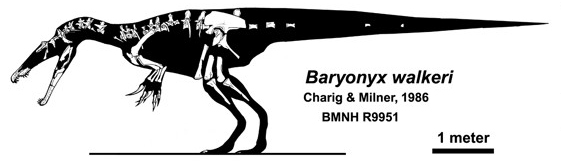
Baronyx walkerii. CC Funkmonk. Note heavy, but short forearms

Above is a skeletal by blogger/artist/researcher Jaime A. Headden. You will notice that of the material we have, the lower legs are missing. Never the less, as in this skeletal, they are usually rendered fairly long and gracile. But they may have been quite a bit stumpier.

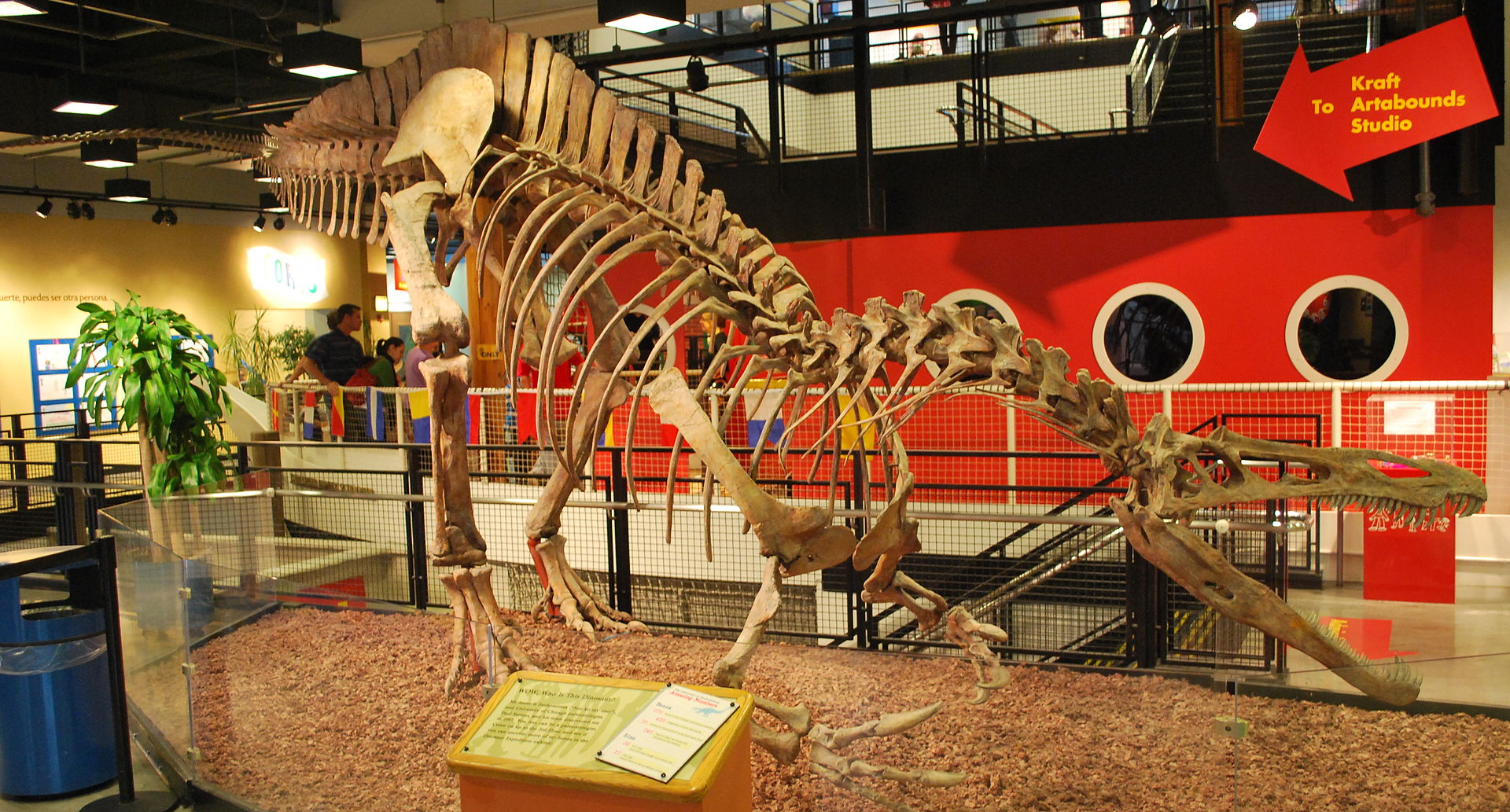
Suchomimus tenerensis. CC AStrangerintheAlps
Again with Suchomimus we see that tendency to fall forward a bit. Almost as if it is begging to go belly slide in some primordial ooze.

Suchomimus tenerensis CC Belinda Hankins Miller

Getting low, getting low.


Support me on Patreon.
Like antediluvian salad on facebook.
Watch me on Deviantart @NashD1.Subscribe to my youtube channel Duane Nash.


Related Posts Plugin for WordPress, Blogger...