Showing posts with label Pleistocene Megafauna. Show all posts

Thursday, February 6, 2014

Mammoths in the Flower Bed

Coming down the pipeline is a new paper in Nature with a slew of authors: Fifty thousand years of Arctic vegetation and megafuanal diet.

Abstract
Although it is generally agreed that the Arctic flora is among the youngest and least diverse on Earth, the processes that shaped it are poorly understood. Here we present 50 thousand years (kyr) of Arctic vegetation history, derived from the first large-scale ancient DNA metabarcoding study of circumpolar plant diversity. For this interval we also explore nematode diversity as a proxy for modelling vegetation cover and soil quality, and diets of herbivorous megafaunal mammals, many of which became extinct around 10 kyr BP (before present). For much of the period investigated, Arctic vegetation consisted of dry steppe-tundra dominated by forbs (non-graminoid herbaceous vascular plants). During the Last Glacial Maximum (25–15 kyr BP), diversity declined markedly, although forbs remained dominant. Much changed after 10 kyr BP, with the appearance of moist tundra dominated by woody plants and graminoids. Our analyses indicate that both graminoids and forbs would have featured in megafaunal diets. As such, our findings question the predominance of a Late Quaternary graminoid-dominated Arctic mammoth steppe.

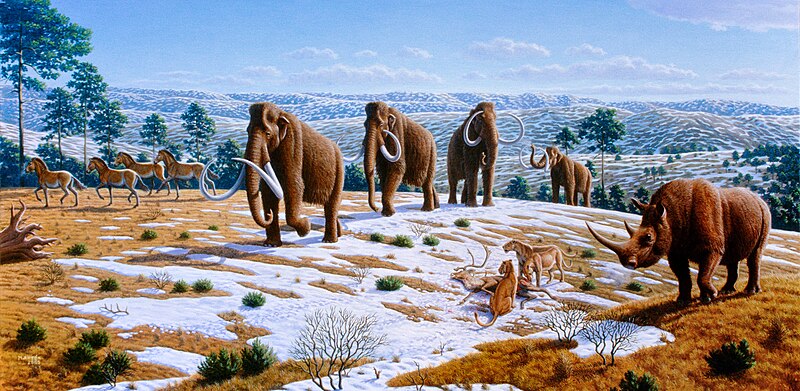
Now you just know I am gonna find this paper very, very interesting as I love the intersection of vegetation, landscape, and megaherbivore. Let us remind ourselves that this paper is about the fabled "mammoth steppe"- the stomping ground for much of the northern latitude megafauna that bit the dust about 10,000 years ago.
Maurico Anton. wiki
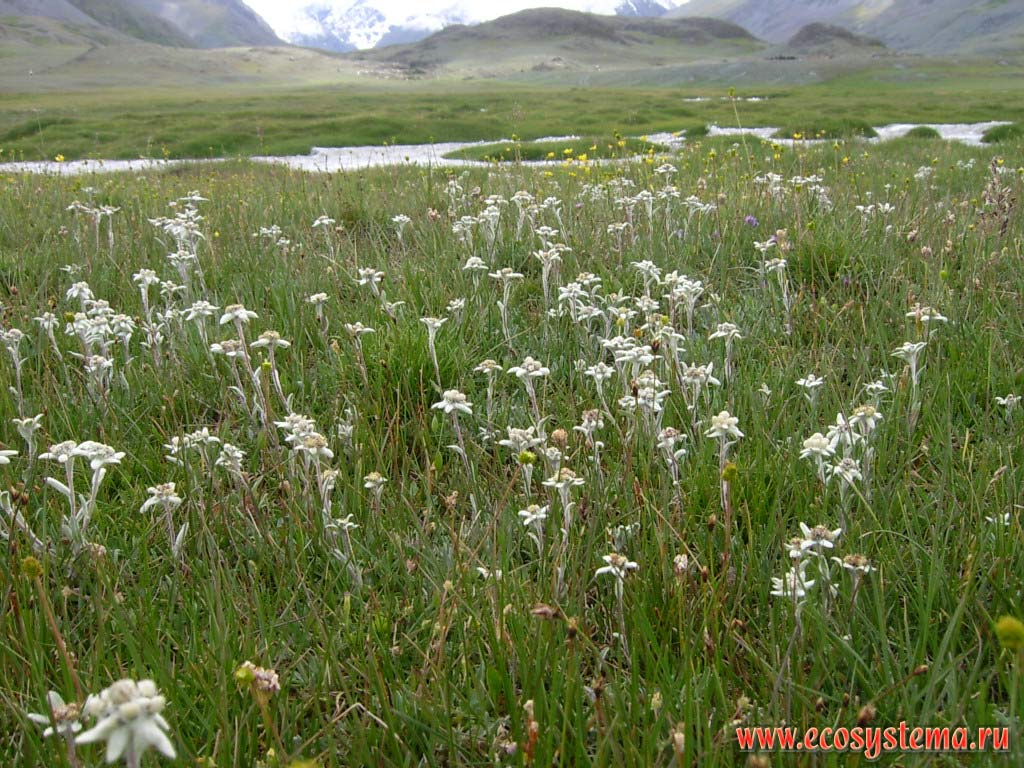
For the sake of brevity mammoth steppe has traditionally been imagined as basically an arctic Serengeti. Grasses, or as the authors like to call them "graminoids", were ubiquitous and accounted for the bulk of the diet of the herbivore hordes. But the study calls this interpretation of the mammoth steppe into question. Instead of grasses being the predominant plant type and fodder- forbs, essentially wildflowers, would have been numerous and diverse on the mammoth steppe.

Specifically these wild flowers would have been not too far off from the seasonal wildflowers that grow in alpine meadows today. And intuitively this makes sense; the arctic tundra is a relatively new environment on the earth therefore one would expect that a guild of plants already pre-adapted to a short growing season to have an advantage in getting a good toehold in the tundra. And, as evinced from the gut contents and coprolites of the herbivores studied, forbs augmented a diet of grass for these animals and the high protein of these plants may have been pivotal in allowing such a diverse and large bestiary of northern megafuana to thrive in these high latitudes.

How and why this diverse landscape of brightly hued wildflowers diminished, seemingly in lock step with the herbivores that thrived on them, is up for debate. Parsimony would suggest that changing climate regimes, from cold and dry to more wet, likely played a role.

As the paper relates to some more broader issues in reconstructing past environments there are a couple take home messages that register for me.

Bias in the paleobotanical record. Grasses were assumed to be dominant because their pollen record is the richest. But grasses are dispersed by wind and therefore broadcast a relatively huge amount of pollen into the environment. Colorful flowers on the other hand are largely pollinated via insects and thus invest less heavily in amount of pollen. And therefore the pollen of flowers will be underrepresented compared to grasses.

If we have been missing the mark in reconstructing relatively recent environments of the Pleistocene, then this folly begs the question- how much are we missing/misinterpreting from environments going back deeper in time? I'm looking at you Mesozoic...

How much of a role did the large herbivores play in maintaining these wildflower habitats? Why do grasses dominant in east African large mammal dominated environments but forbs in the Pleistocene arctic? Does fire favor grasses in hot environments compared to forbs in relatively cooler and less fire prone environments?

As always more questions...


Support me on Patreon.
Like antediluvian salad on facebook.
Watch me on Deviantart @NashD1.Subscribe to my youtube channel Duane Nash.


Friday, July 20, 2012

Mountaineering Moa: Coproecology of the Upland Moa (Megalapteryx didinus)


Much like the Mammoth family, Moa birds (Dinornithiformes), are tantalizingly alluring because they only very recently went extinct (13th century A.D.). Like the Woolly Mammoth we don't just have fossils of these avian giants but also mummified bodies, eggs, midden remains and feces. Because of their recent extinction, quality of remains, and the fact that their vegetative habitat still exists in New Zealand allows perhaps better precision in reconstructing their ecology than any other group of extinct mega-herbivores.

A recent paper in PLoS ONE analyzes the preserved coprolites of the Upland Moa (Megalapteryx didinus). 35 coprolites from a remote sub-alpine cave reveal  pollen, macrofossil traces, and DNA  representing 67 plant species. Included is the first evidence of Moa feeding on the nectar rich flowers of New Zealand flax (phormium) and tree fuchsia (Fuchsia excorticata).

Common in cultivation around world New Zealand Flax Phormium cookianum
The pattern of pollen in the coprolite suggests the Upland Moa made periodic foraging trips up to the sub-alpine zone in the summer but retreated to lower elevations in the winter- perhaps making it vulnerable to newly arrived human hunters. The breadth of plants consumed suggests a generalist herbivore that did not feed at one level or in one type of habitat. The amount of seeds discovered suggested to the researchers that the Upland Moa, and perhaps other Moa species, were important dispersers of seeds in New Zealand vegetative communities. Furthermore, the authors suggest, modern day New Zealand plant communities may yet show further changes in distribution since the loss of these native herbivores is so recent and introduced mammalian herbivores have appeared.

Illustration by Author. Upland Moa (Megalapteryx didinus) enjoying some Phormium cookianum flowers in rocky terrain.


Large extinct megaherbivore, fragile island ecology, introduced mammalian herbivores....hmmm hopefully some of you are connecting the dots between this article and my last article. A quote from the paper:

"The coprolites provide some evidence for recent changes in plant abundance and distribution since human settlement. Fuchsia and wineberry (Aristotelia) were identified from the coprolites using both DNA and pollen, yet were not recorded from the Garibaldi Range by Druce et al. [38]. Both taxa are highly palatable to introduced herbivores [69], [72] and can suffer severe local declines due to over-browsing [73]. Further evidence that the herbivory pressure exerted by introduced mammals on Garibaldi Plateau is greater than that exerted under the prehuman avian-dominated regime comes from the large number of plant taxa in the coprolites (34.3%) that are now largely restricted to trench and sinkhole walls (Fig. 5). Rather than reflecting a tendency for upland moa to feed around these holes, it is more likely that these sites are now refuges to a range of palatable plants, which once may have been more widespread in subalpine herbfields but are now heavily browsed by introduced mammalian herbivores."

Those troublesome ungulates- once again we see that our hoofed friends put undue browsing pressure on a system that previously easily sustained 250 kg 12 foot tall herbivorous birds. In This Island Earth II you will remember I contrasted some of the characteristics that allowed Pygmy Mammoths to thrive with the native vegetation but not feral pigs. Did Moa birds share some of these characteristics? Let's see.

Reproduction. Moa are known for laying small clutches (Holdaway & Jacombs 2001). This makes the Moa reproductively more like the mammoth than the pig. In exceptionally good years they will not overrun their habitat in a single season.

Movement. Based on the pollen evidence the Upland Moa seems to have exploited both upper and lower elevations. Many Moa species show range overlap so perhaps they had some sort of resource partitioning going on. Again, more like the mammoth in utilizing different habitats effectively. Not any one habitat would feel the brunt of Moa browsing.

Food Choices. Again, like the mammoth, the Upland Moa shows a diversity in food choices. Does not put stress on any one type of vegetation. Unlike the pig and say, acorns.

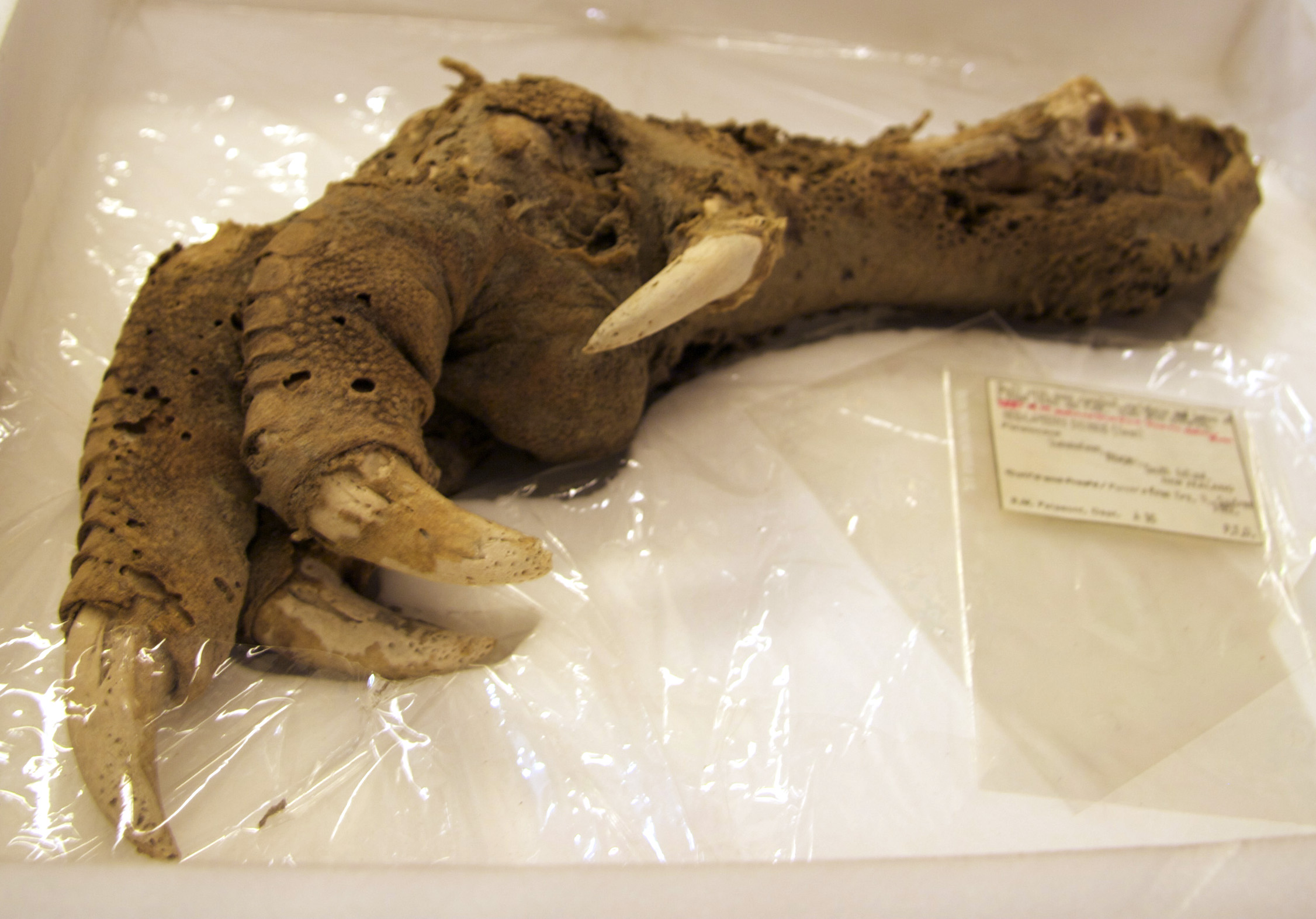
Feet. What do you know, the Moa has relatively soft feet (if not pretty) compared to hoofed mammals. The sharp claws on the Upland Moa foot pictured below were, I postulate,  adaptations to negotiate rocky terrain


Again, we can't assume that the size of a herbivore is proportionate to the amount of stress it places on the vegetation!!!


Pertinencia

No Moa: Modeling an Extinction. http://www.archaeology.org/online/features/moa/

Wood JR, Wilmshurst JM, Wagstaff SJ, Worthy TH, Rawlence NJ, et al. (2012) High-Resolution Coproecology: Using Coprolites to Reconstruct the Habits and Habitats of New Zealand’s Extinct Upland Moa (Megalapteryx didinus). PLoS ONE 7(6): e40025. doi:10.1371/journal.pone.0040025


Support me on Patreon.
Like antediluvian salad on facebook.
Watch me on Deviantart @NashD1.Subscribe to my youtube channel Duane Nash.


Related Posts Plugin for WordPress, Blogger...